Cloudflare stock clears Wall Street's highest target
Two numbers that tell opposite stories
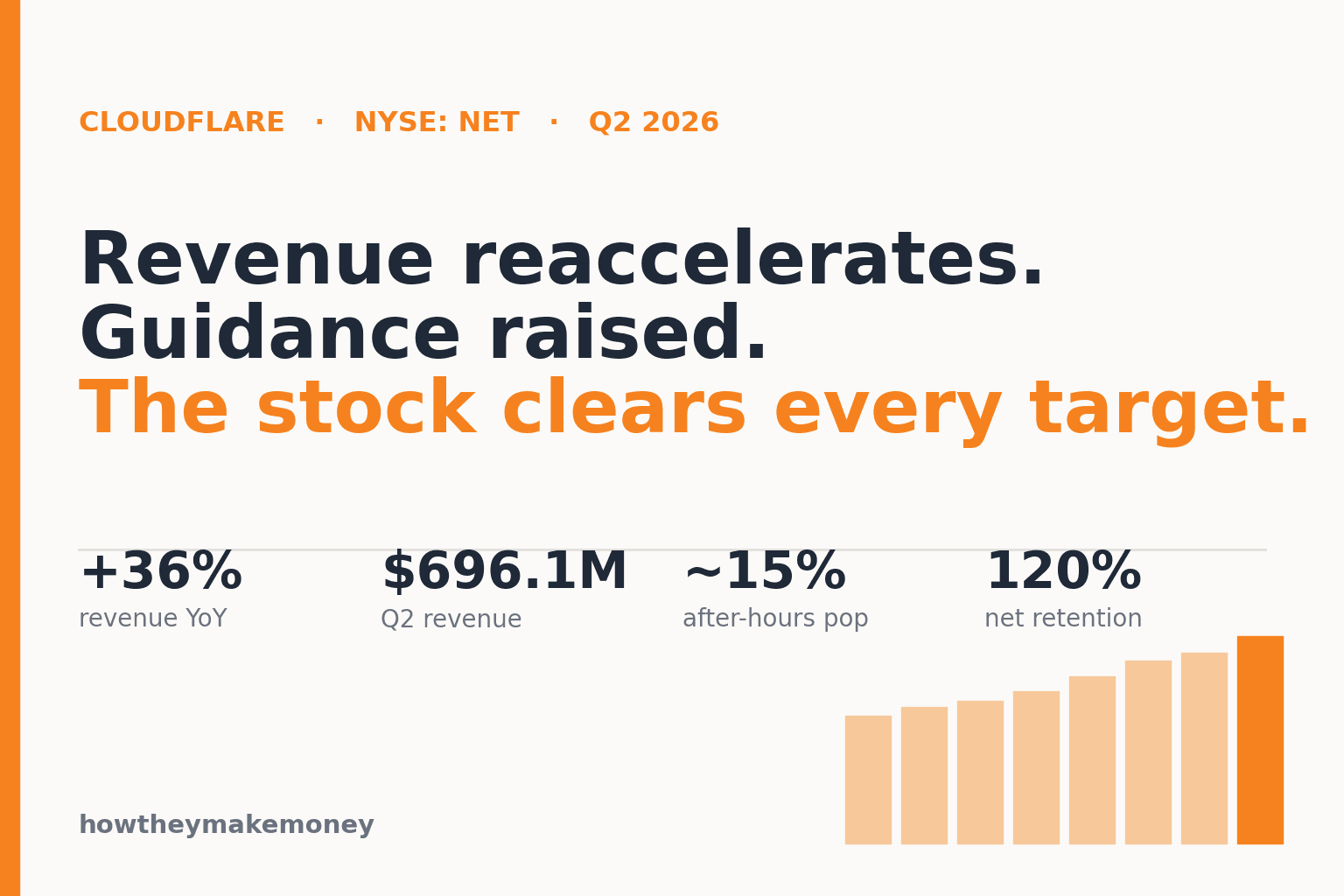
On the evening of August 6, 2026, Cloudflare reported a quarter built around a contradiction. The company posted a GAAP net loss of $170.0 million, its widest in years. It also posted its fastest revenue growth in more than a year, raised its guidance for the full year, and watched its stock jump about 15% in after-hours trading to a record high. Investors sided emphatically with the second story.
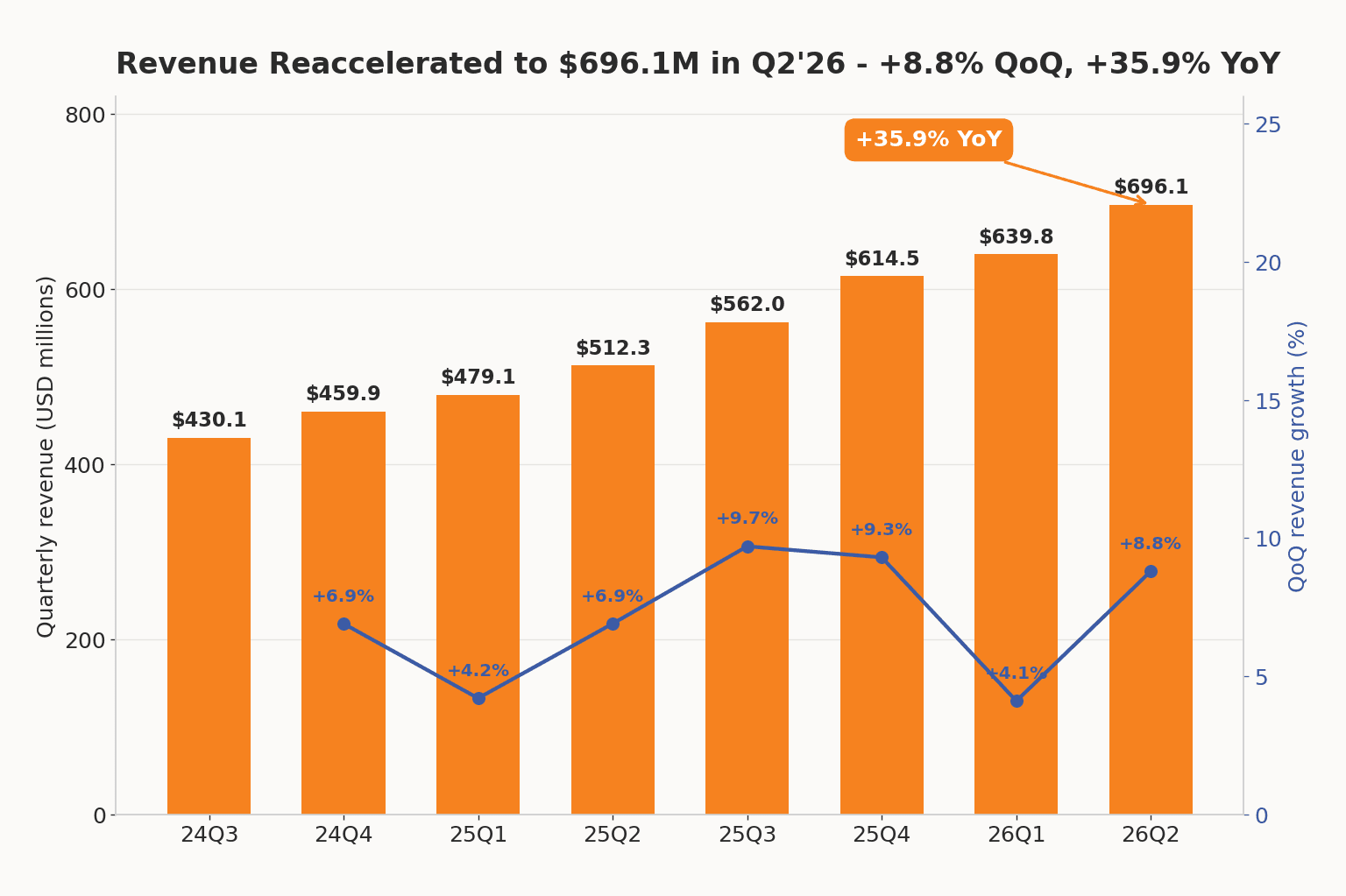
Revenue reached $696.1 million, up 35.9% from a year earlier and up 8.8% from the prior quarter. That is a genuine reacceleration. Sequential growth had cooled to roughly 4% in the March quarter, and the company more than doubled that pace here. Wall Street had modeled about $665 million, so the top line cleared expectations by close to 5%.
The loss that was not really a loss
The headline GAAP loss looks alarming until you find the single line responsible for it. Cloudflare booked a $150.7 million restructuring charge in the quarter, severance and facilities costs tied to the "AI-first" reorganization it began earlier in the year. There was no comparable charge a year ago. Strip it out, and management said the GAAP net loss would have been roughly $18 million.
On the measure Wall Street watches most closely, the picture was the opposite of a loss. Non-GAAP net income rose to $107.8 million, up 43.6% from a year earlier, and non-GAAP earnings came in at $0.29 a share, ahead of the $0.27 analysts expected. Non-GAAP operating income of $96.1 million lifted the operating margin to 13.8%, up 2.4 points from the prior quarter as the cost cuts began to flow through.
A margin that finally stopped falling
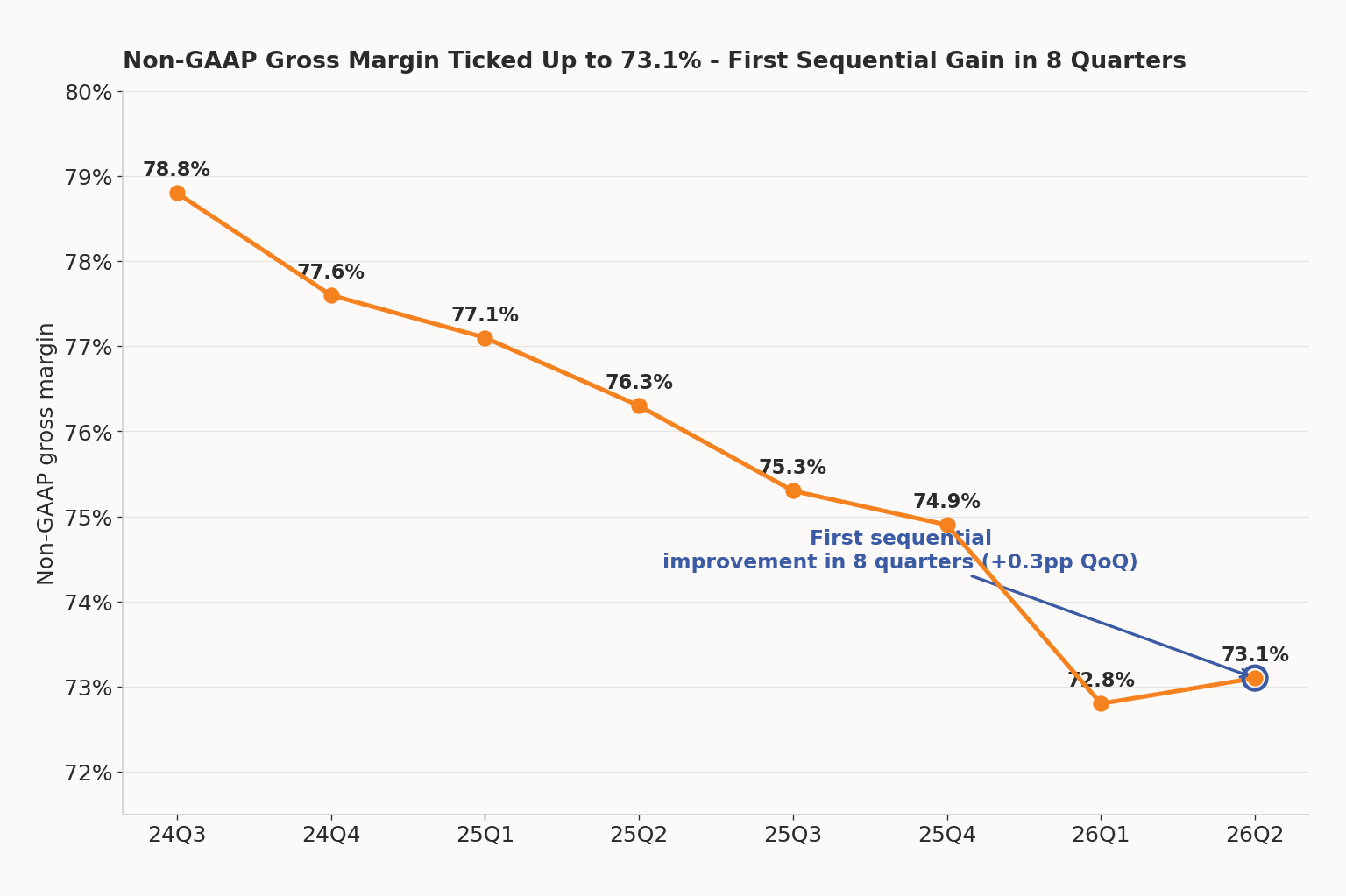
One figure carried outsized weight for a company that has spent two years absorbing the cost of AI traffic. Non-GAAP gross margin was 73.1%, up 0.3 of a point from the prior quarter. That is a small move, but it is the first sequential improvement in eight quarters. Gross margin is the share of revenue left after the direct cost of delivering the service, and Cloudflare's had been grinding lower as automated, non-paying "bot" traffic swelled across its network. Finance chief Thomas Seifert said that pressure is "beginning to stabilize." Margin still sits well below the 76.3% of a year ago, so this is a bend in the trend, not a full recovery.
Big customers, and a lot more of them
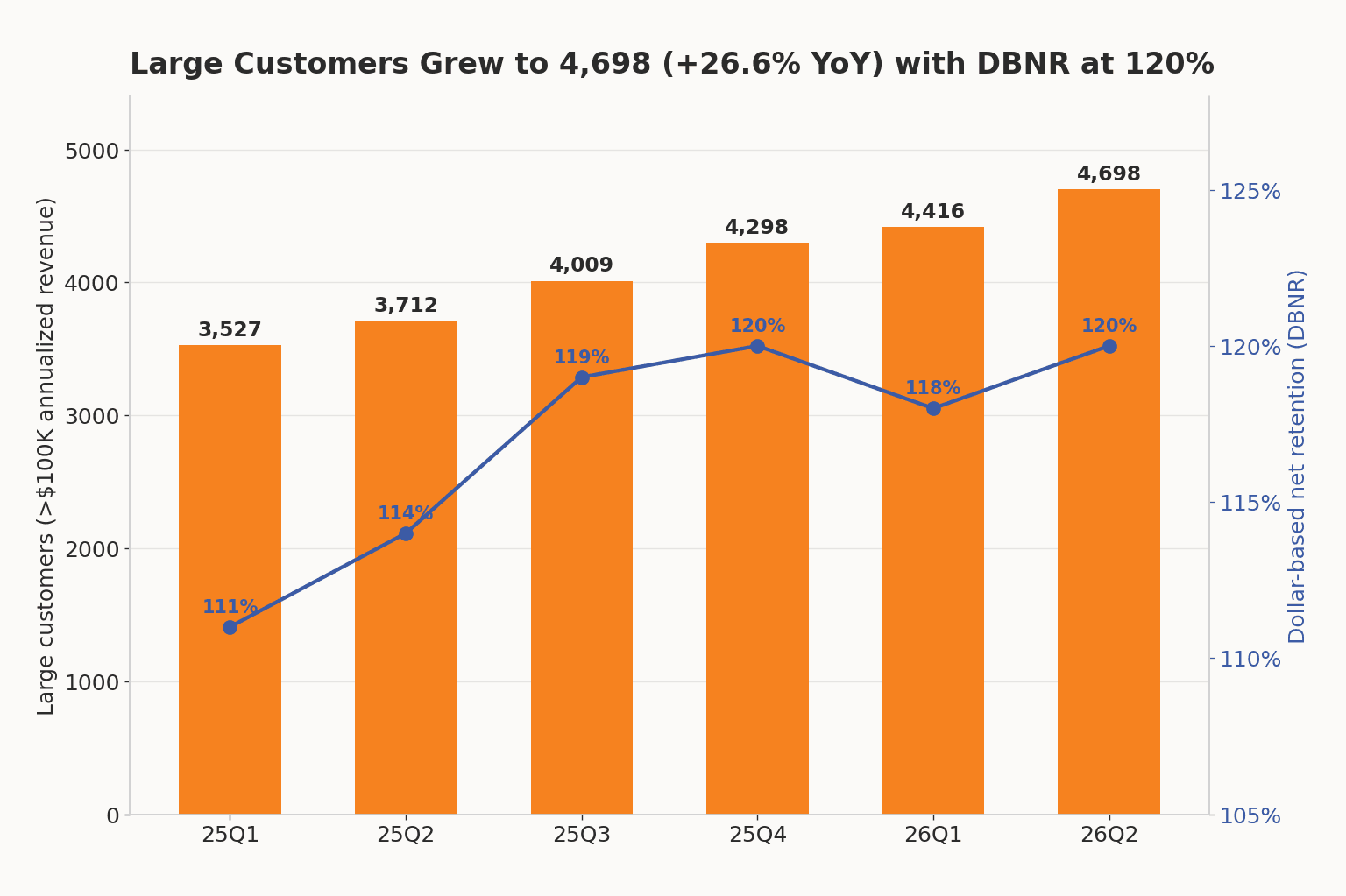
Underneath the margins, demand looked as strong as it has in some time. Cloudflare ended the quarter with 4,698 customers spending more than $100,000 a year, up 26.6% from a year earlier and 282 higher than the prior quarter. Over the trailing twelve months it added a record 986 of these large accounts, the most it has ever added in a single year. Dollar-based net retention, which tracks how much more existing customers spend over time, rose to 120% from 118% in the prior quarter.
The company also added more than 80,000 paying customers in the quarter, roughly as many as it had in total when it went public in 2019, and its developer base passed 7.4 million.
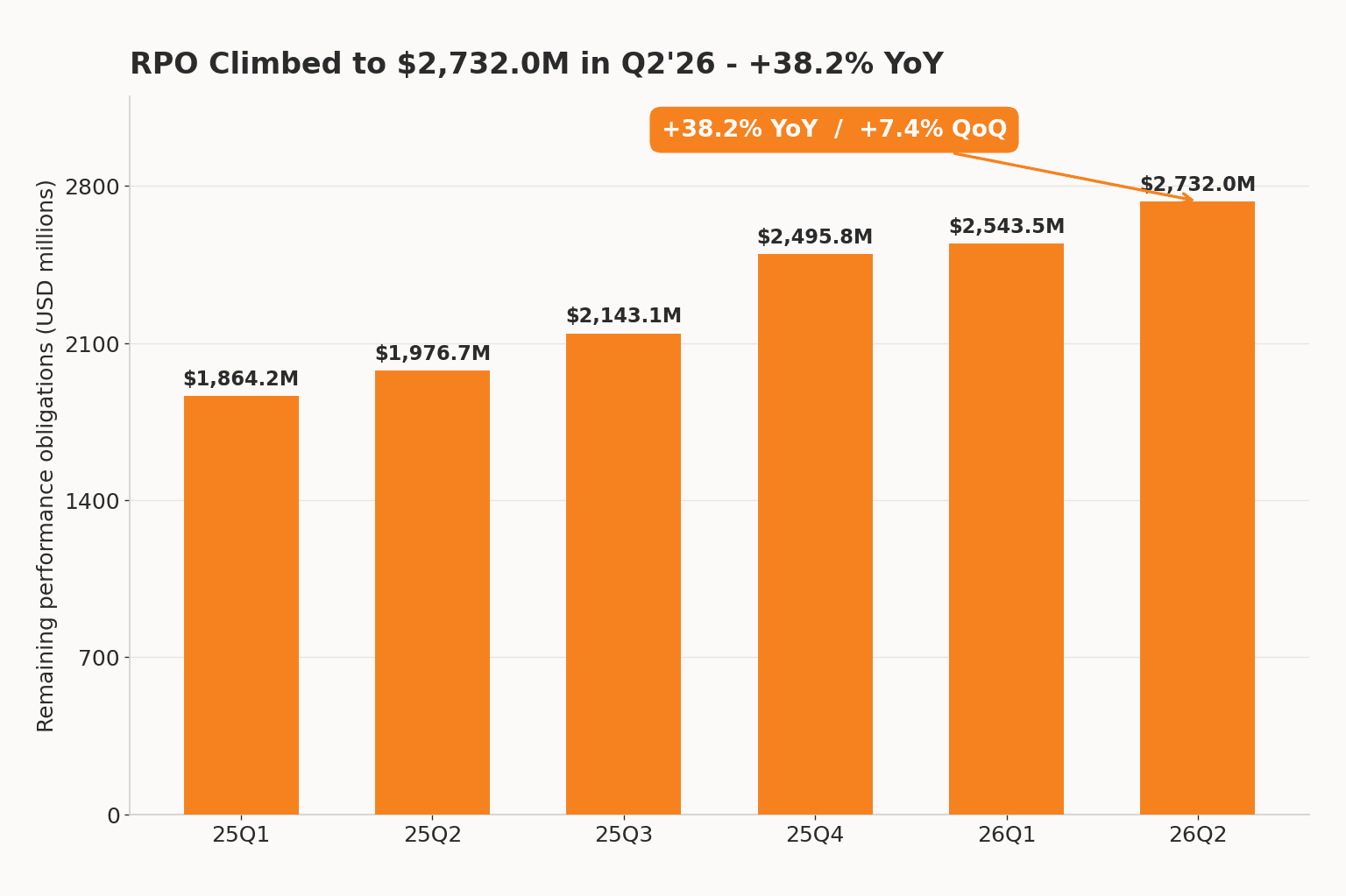
Committed future revenue backed up the growth. Remaining performance obligations, the contracted business not yet booked as revenue, reached $2.73 billion, up 38.2% from a year earlier. That is faster than reported revenue grew, and a backlog outrunning the income statement usually signals a pipeline filling ahead of what the current numbers show.
The story management is selling
CEO Matthew Prince spent the call on a larger theme: the internet is being taken over by machines. For the first time, he said, more than half of the traffic across Cloudflare's network during the quarter was not human, generated instead by AI agents and automation. The company is building tools to charge for that traffic, including new payment rails meant to let websites bill AI agents fractions of a cent per request, and it announced a pilot with OpenAI on content monetization. Management said Cloudflare's serverless "Workers" platform has "tipped" into a meaningful revenue contributor, though it still declines to break out the figure.
For the full year, Cloudflare now expects revenue of $2.864 billion to $2.870 billion, about 32% growth, with non-GAAP earnings of $1.25 to $1.26 a share. Both are increases from its prior outlook. It also cautioned that restructuring charges could reach $165 million for the year.
The market's split verdict
The stock's reaction was the clearest signal of all. NET had closed the regular session down 2.9% at $284.43 amid broad software weakness, then jumped to about $329 right after the report and drifted higher toward $335 in extended trading, a gain of roughly 15% to 18%. The move carried the shares past the highest published analyst price target on Wall Street, around $330, leaving the stock trading above the entire target range. At that level the company was valued at roughly 41 times its own full-year revenue forecast, a rich price that becomes the next argument.
What made the reaction striking was the contrast next door. The same evening, Datadog fell about 19% even though it too grew around 36%, punished for softer forward guidance and reduced usage from one large AI customer. Two companies, nearly identical growth rates, opposite outcomes. The difference was not the quarter each had just posted but the story each told about what comes next, and Cloudflare's raised outlook and agent narrative won the night.
The bottom line
Cloudflare's quarter was a beat-and-raise dressed up as a loss. The $150.7 million charge is real cash heading out the door, and the AI traffic that now dominates its network remains a margin question as much as an opportunity. But revenue is speeding up rather than slowing, guidance moved higher, large-customer growth set a record, and for the first time in two years the margin trend turned the right way. For a market hunting for the companies that will get paid as software agents multiply, that combination was enough to send the stock to a record high and past every target set for it.