Airbnb's Q1 2026: Emerging Markets Become the Engine, But Don't Miss the Margin Story
The Emerging Market Inflection Point
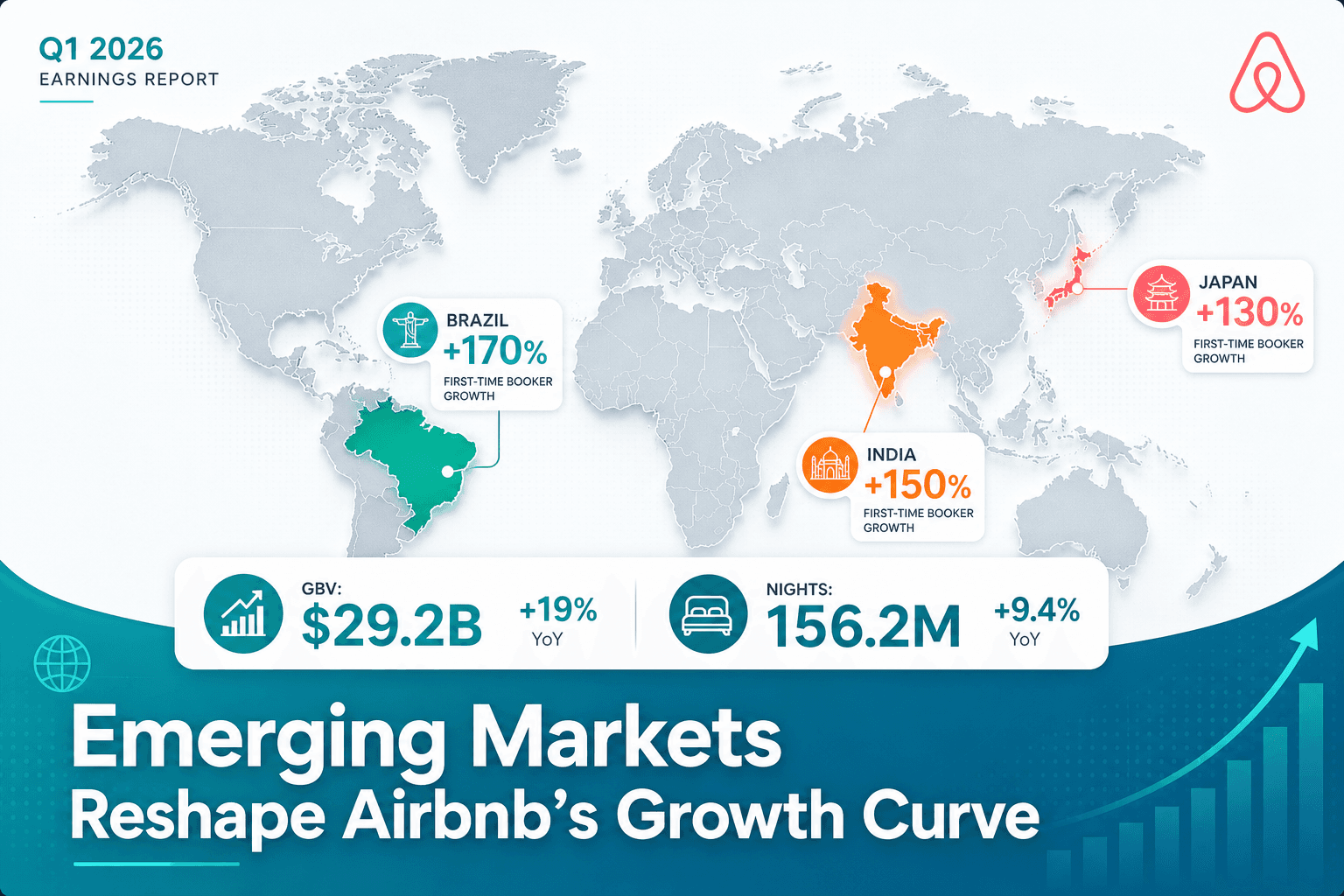
Airbnb reported Q1 2026 on May 7 with a headline that sounded familiar to investors watching the travel-tech space: beat on revenue, raise on guidance, demand looks resilient. But buried in the earnings call was a metric that reframes the entire bull case for the next five years.
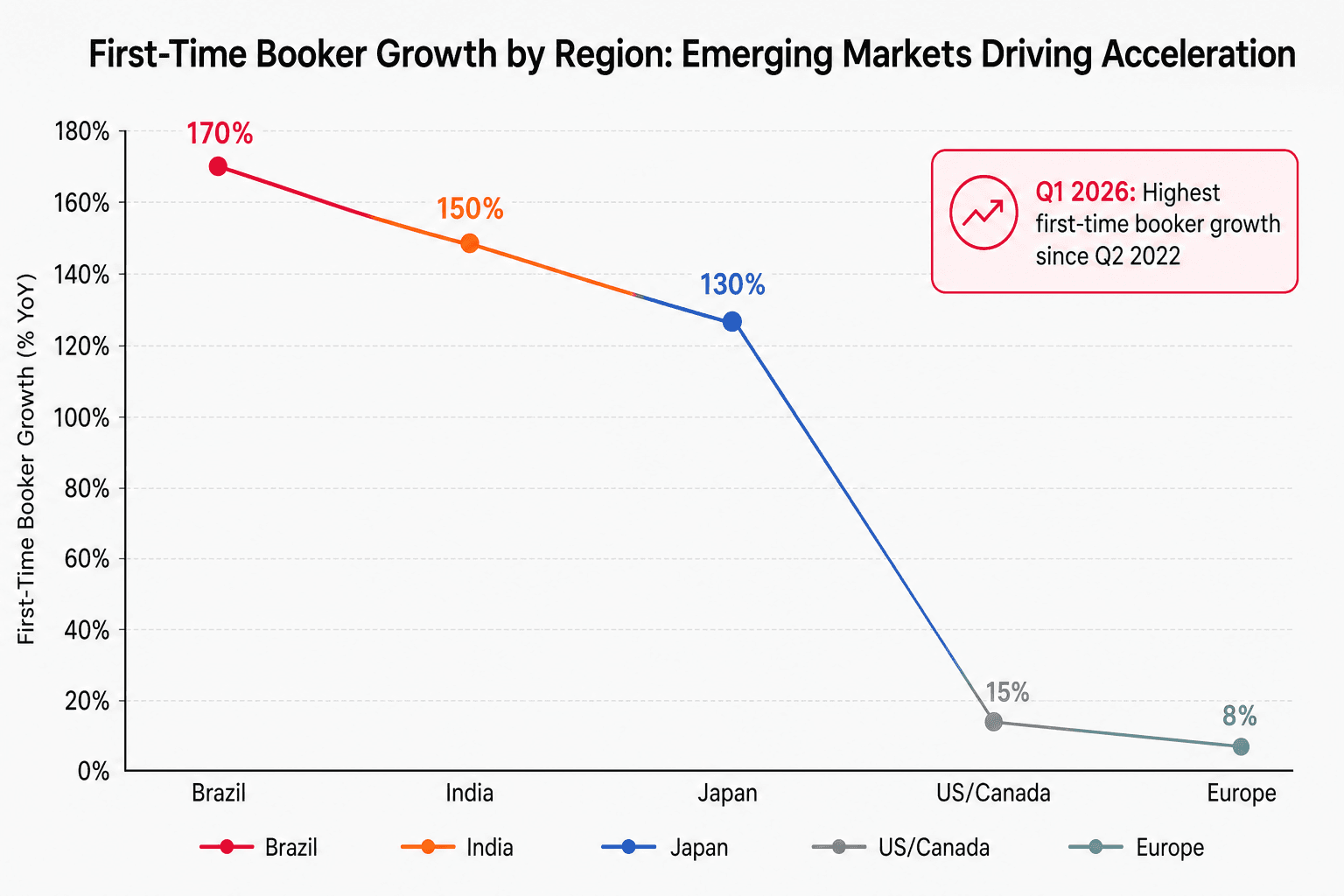
First-time booker growth in Brazil hit +170% year-over-year. India was +150% YoY. Japan hit +130% YoY. This is not a one-quarter artifact. This is the highest first-time booker growth rate Airbnb has posted since Q2 2022 — the low point of pandemic-era consumer travel recovery. The implication is stark: Airbnb has cracked the emerging-market code, and the company is now in the early innings of a geographic expansion that doubles the addressable TAM.
That's the story that moved the stock 2.6% higher on the open-to-close (May 7–8). That's also the story that explains why management is comfortable taking a 5.6% ADR haircut and telling investors not to worry.
The Numbers, Annotated
| Metric | Q1 2026 | YoY | vs. Consensus |
|---|---|---|---|
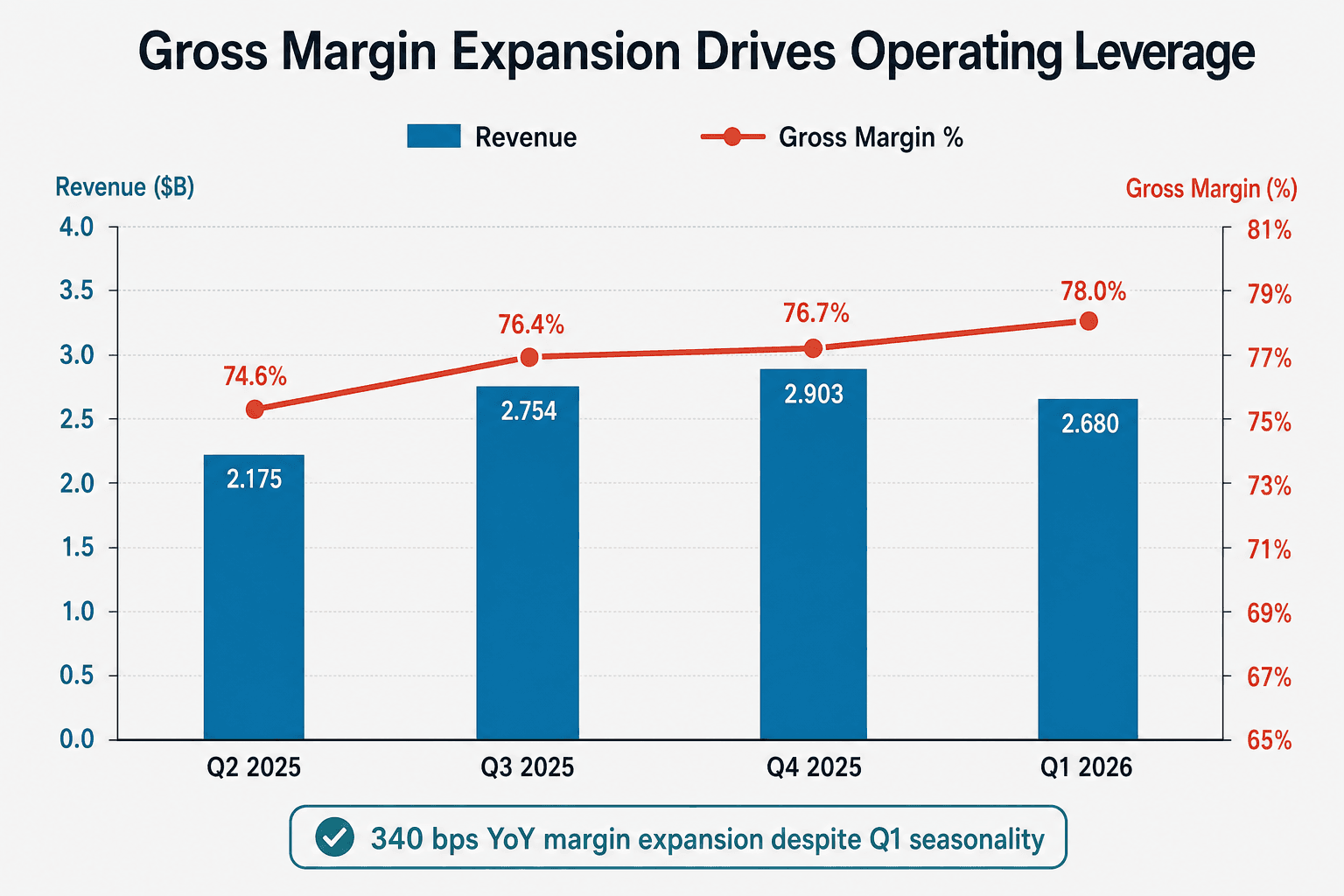
| Revenue | $2,680M | +18% | +$60M beat |
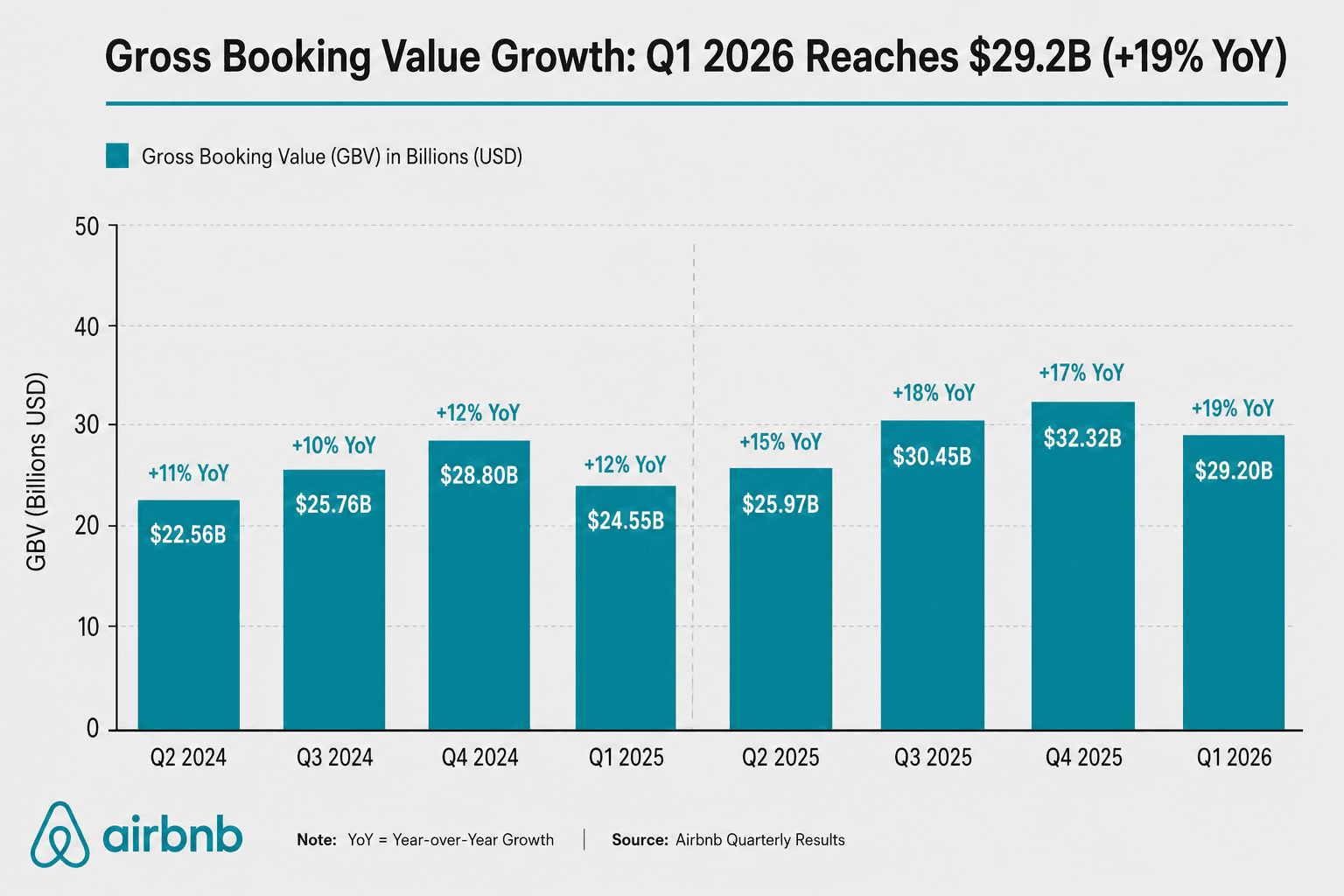
| Gross Booking Value | $29.2B | +19% | — |
| Nights & Experiences Booked | 156.2M | +9.4% | — |
| Gross margin | 78.0% | +340 bps | — |
| Operating margin | 43.0% | +730 bps | — |
| EPS (diluted) | $0.26 | +18% | −$0.03 miss |
| Free cash flow | $1,362M | +24.6% | — |
Revenue beat is the headline, but the margin expansion is the story. Gross margin at 78% is now touching levels Airbnb hit in peak 2024. The difference: in 2024, this came from peak-demand pricing and high-ADR mix. In Q1 2026, this comes despite intentional ADR compression and geographic mix shift toward lower-priced markets.
That is the definition of structural margin expansion.
The GBV Story: 19% Growth on What Looks Like 9% Nights Growth
Gross booking value grew 19% YoY while nights booked grew only 9.4% YoY. The gap is ADR: down 5.6% YoY, a headwind that would normally kill a growth story. Instead, Airbnb management framed it as the strategy. Nights grew 9.4%. Take rate held at 14.1% (stable YoY, down just 10 bps). GBV grew 19%.
The math: even at lower ADR, each night is now being monetized more effectively through higher-margin Experiences, Plus membership premiums, and platform ancillary services (host insurance, guest protection, etc.). When you add nights growth + stable take rate + margin mix shift, you get 19% GBV growth that holds unit economics.
Nights Booked Resilience in the Face of Geopolitical Headwinds
Nights & Experiences booked came in at 156.2M, up 9.4% YoY. This headline disguises the actual impressive work underneath: Q1 2026 experienced "slightly elevated" cancellation rates in EMEA and APAC regions (Iran-related tensions), quantified by management as roughly 75 basis points of headwind to international bookings. Despite this, demand held up.
Why? Because emerging markets compensated. Brazil, India, and Japan are now large enough in absolute bookings that a 75-bps headwind to mature Europe doesn't derail the global growth rate. The chart below shows the composition:
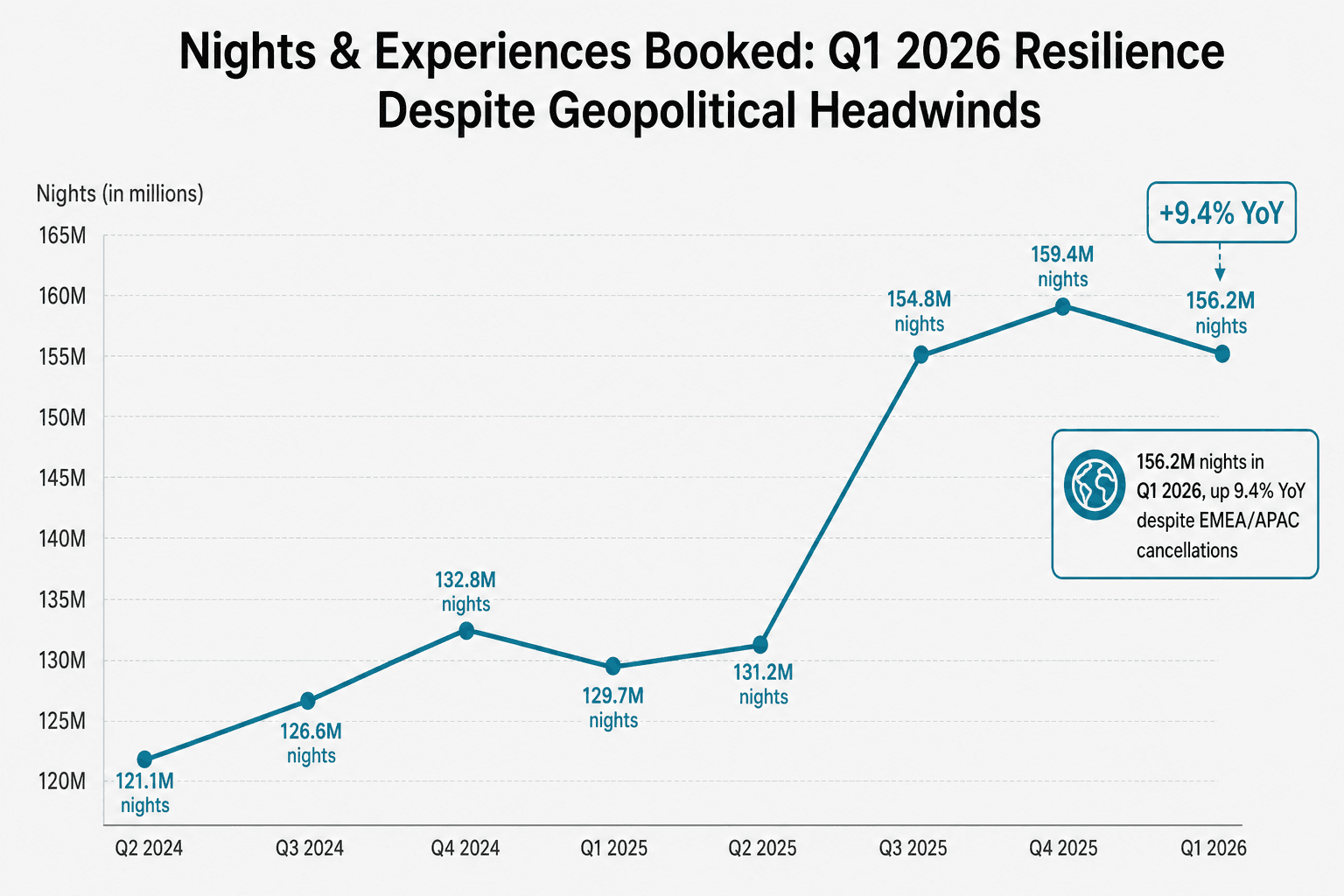
That is exactly what you want to see from a company trying to de-risk geographic concentration. Not growth despite headwinds. Growth because diversification now insulates you from concentrated shocks.
The Bear Case, Tightened but Real
Airbnb's stock is now trading at 8.3x EV/Sales — call it 8.5x implied for 2026 revenues. That multiple presumes that emerging-market growth doesn't decelerate, that take rate holds, and that the company can simultaneously expand margins while investing in international infrastructure. If any of those assumptions break, multiple compression is an existential risk.
Two specific gotchas:
1. Emerging-market cohort churn. First-time booker growth is stratospheric, but what happens when those users mature? Brazil users may have different churn curves than US users (lower lifetime value). Management has emphasized that NPS is stronger in emerging cohorts, but this is a 12-24 month thesis to prove, not a done deal.
2. ADR stabilization. The plan is to take the ADR hit in exchange for volume and take rate stability. If ADR keeps compressing beyond -5% YoY, the math breaks. Watch the Q2 print carefully. If ADR hits -8% YoY or worse, the "mix shift" narrative loses credibility.
What to Watch Into 2026
Q2 2026 (July earnings): Paris Olympics (Q2/Q3 border) should drive summer bookings. Management's Q2 guide of $3.54–$3.60B (+14–16% YoY) is conservatively positioned, implying upside if Olympics materialize and EMEA/APAC cancellations normalize faster than expected.
Plus membership penetration: Currently estimated at ~8% of users. If this reaches 10%+ by end of 2026, it unlocks a new pricing power narrative (higher LTV visibility).
Experiences as a material segment: Growing 3x faster than core nights. Still immaterial to revenue, but if Experiences reaches 5–7% of booking value by late 2026, that's a new growth vector.
FX headwinds: International revenue is 50% of GBV. If USD stays strong, Airbnb has 50 bps of FX headwind built in. Weakness would be upside surprise.
The Cleanest Take
Emerging-market expansion is real, durable, and now big enough to reshape the entire company's growth trajectory. The take-rate stability and margin expansion while pursuing this strategy prove that Airbnb isn't trading unit economics for growth — it's swapping ADR for volume and holding everything else constant. That is the exact move you want a mature platform to make. The stock reflected this on May 8, and the Street is now pricing Airbnb as a "higher growth + lower risk" name for 2026–2027.
Whether the multiple holds will depend on execution in Q2 and beyond. But the inflection point is real.